
When water damages your home, one of the first questions is simple:
How long will it take to dry everything out?
In most homes, water damage takes about 3 to 5 days to dry after standing water is removed. A small clean-water leak may dry in 2 to 3 days, while larger or more severe damage can take 7 days or longer, especially if water reached walls, flooring, insulation, cabinets, subfloors, or crawl spaces.
The exact drying time depends on several key factors:
- How much water entered the home
- How long the water sat
- What materials got wet
- Whether water reached hidden areas
- Indoor humidity and airflow
- Whether the water was clean or contaminated
- How quickly water removal and drying started
One important thing to understand is this:
Your home is not fully dry just because the floor, wall, or carpet feels dry.
Water can remain trapped behind baseboards, under flooring, inside drywall, behind cabinets, and in other building materials you cannot see. Because of this, proper drying is based on moisture readings and monitoring—not just appearance or touch.
This professional drying process is known as structural drying and is a key part of the water mitigation process.
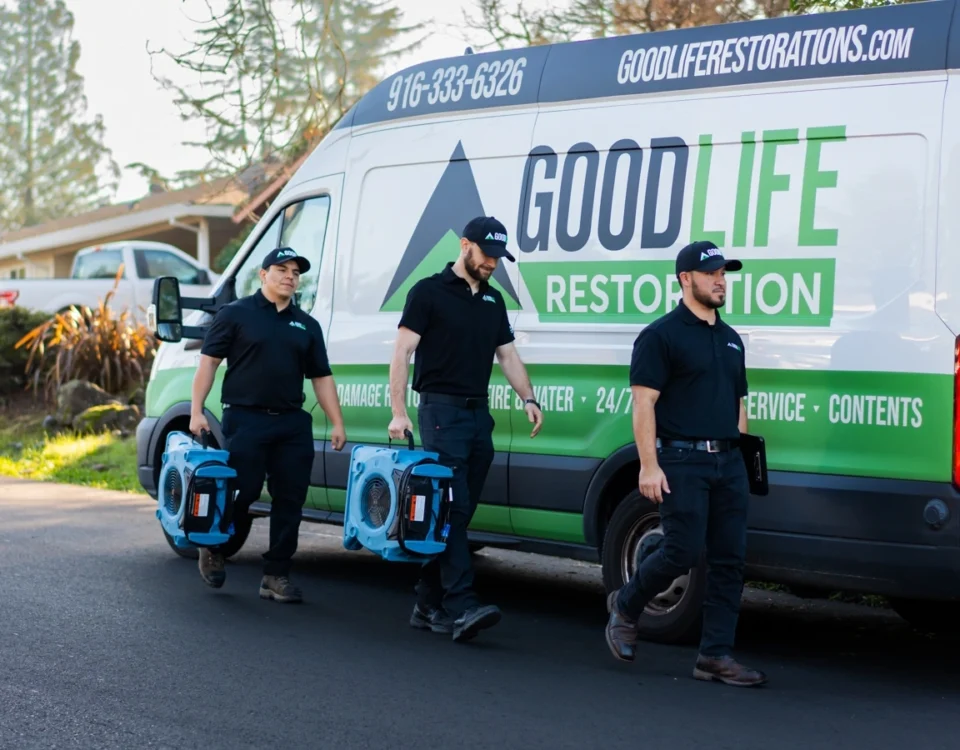
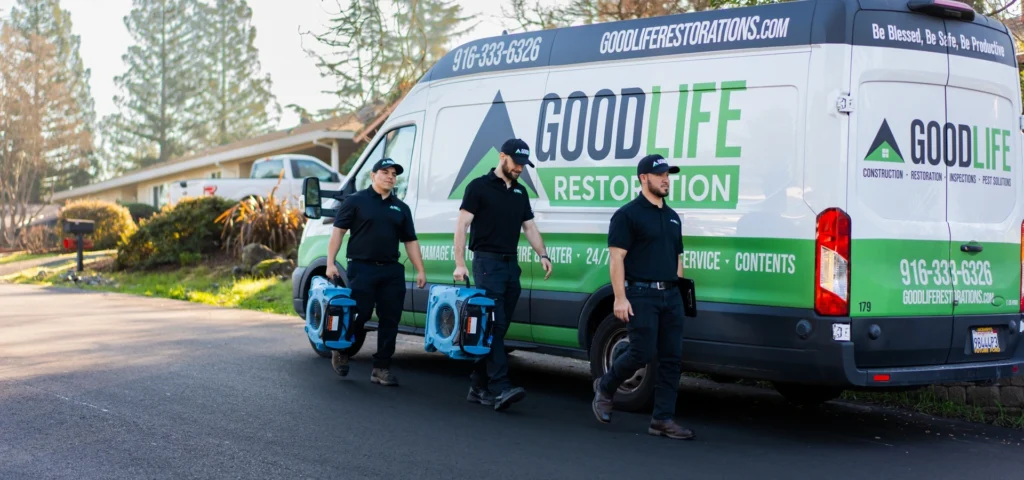
Good Life Restoration helps Sacramento-area homeowners with water removal, water mitigation, structural drying, moisture monitoring, cleanup, and repairs after water damage.
Water Damage Drying Time by Situation
| Water Damage Situation | Typical Drying Time |
|---|---|
| Small clean-water leak caught quickly | 2–3 days |
| Standard residential water damage | 3–5 days |
| Wet drywall, baseboards, carpet pad, or subfloor | 3–7 days |
| Hardwood flooring, cabinets, or built-ins affected | 5–10+ days |
| Crawl space, concrete, or deep saturation | 7–14+ days |
| Sewage, stormwater, delayed cleanup, or contaminated water | 7+ days and possible material removal |
These timelines are general estimates. A restoration technician should confirm drying progress with moisture meters, humidity readings, temperature readings, and drying logs.
What Should You Do Right Away After Water Damage?
If you just found water damage, start by stopping the source of water if it is safe to do so.
For example, you may need to:
- Turn off the water supply to a leaking fixture
- Shut off a leaking appliance
- Stop using a damaged plumbing line
- Place a bucket under an active leak
- Call a plumber if the water source is still active
Then, protect yourself and the affected area:
- Avoid walking through standing water
- Keep children and pets away from wet areas
- Do not use electrical outlets or appliances near water
- Move small valuable items away from water if it is safe
- Take photos of the damage before cleanup
- Call a water damage restoration company if water reached building materials
If water reached flooring, drywall, baseboards, cabinets, carpet, or a crawl space, do not assume it will dry on its own. Hidden moisture can stay inside materials even when the room looks normal.
What Not to Do After Water Damage
After water damage, avoid these common mistakes:
- Do not turn off drying equipment early
- Do not assume the area is dry because it feels dry
- Do not rely only on household fans for wet walls, flooring, cabinets, or subfloors
- Do not remove wet materials if the water may be contaminated
- Do not wait several days to check for hidden moisture
- Do not start repairs before the structure is confirmed dry
Starting repairs too early can trap moisture inside the home. That can lead to mold, musty odors, swollen materials, warped flooring, or more expensive repairs later.
What Is Structural Drying?
Structural drying is the professional process of removing moisture from building materials after water damage.
This may include drying:
- Drywall
- Baseboards and trim
- Wood framing
- Flooring
- Subflooring
- Cabinets
- Wall cavities
- Crawl spaces
- Concrete or slab areas
- Other affected building materials
Structural drying is different from simply cleaning up visible water. After a leak, flood, appliance overflow, or plumbing failure, water can move into hidden areas. Even if the room looks dry, moisture may still be trapped behind walls, under floors, or inside porous materials.
Why a Room Can Look Dry but Still Be Wet
A wall may feel dry on the outside, but the inside of the wall can still hold moisture. A floor may look fine, but water may be trapped under the flooring or inside the subfloor. A cabinet may seem dry, but moisture can stay behind it, underneath it, or inside nearby materials.
Moisture can hide in places such as:
- Behind baseboards
- Under vinyl, laminate, tile, or hardwood flooring
- Inside drywall
- Inside carpet pad
- In wood framing
- Behind cabinets
- In insulation
- Inside crawl spaces
- Under built-ins
That is why professional drying is not based only on how the room looks or feels. It is based on moisture readings.
Why Water Damage Usually Takes Several Days to Dry
Water damage takes time to dry because moisture has to move out of wet materials and into the air. Then that moisture has to be removed from the air.
Professional drying equipment usually works in two ways:
Air movers help move moisture out of wet surfaces and materials.
Dehumidifiers remove moisture from the air so the room can continue drying.
If equipment is removed too early, moisture may remain inside walls, flooring, cabinets, or other materials. That can lead to mold, odors, swelling, warping, and more expensive repairs.
What Affects Water Damage Drying Time?
Every water damage situation is different. The drying timeline depends on several important factors.
1. How Much Water Entered the Home
A small sink leak usually dries faster than a burst pipe, flooded room, roof leak, or appliance failure.
More water usually means more extraction, more drying equipment, more monitoring, and more drying time.
2. How Long the Water Sat
The faster drying begins, the better.
If water sits for several hours or overnight, it can travel deeper into flooring, trim, drywall, cabinets, and subfloors. The longer materials stay wet, the longer the drying process usually takes.
3. What Materials Got Wet
Some materials dry faster than others.
Hard surfaces may dry quickly. Materials like drywall, carpet pad, insulation, hardwood, cabinets, and subfloors can hold moisture longer.
Wet insulation and carpet pad often need special attention because they can trap moisture and slow down drying.
4. Whether Water Reached Hidden Areas
If water moved behind walls, under floors, into cabinets, or into a crawl space, the job may take longer than a simple surface cleanup.
Hidden moisture is one of the main reasons homeowners should not rely only on what they can see.
5. Indoor Humidity and Airflow
Drying is slower when indoor humidity is high or airflow is poor.
Professional dehumidifiers and air movers help control the drying environment. Without proper airflow and humidity control, wet materials may stay damp much longer.
6. The Type of Water Involved
Clean water from a supply line is usually easier to handle than water from a toilet overflow, sewer backup, storm intrusion, or long-term leak.
Contaminated water may require material removal, cleaning, sanitizing, and additional safety steps before drying can be completed.
How Long Should Fans Run After Water Damage?
Fans or air movers usually run for several days after water damage. In many cases, they run during the same 3 to 5 day drying period.
But the correct answer depends on moisture readings.
You should not turn off drying equipment just because the room feels dry. Turning equipment off too early can slow the drying process and may leave moisture inside walls, flooring, or other materials.
How Long Should Dehumidifiers Run After Water Damage?
Dehumidifiers usually run together with air movers.
For many residential water damage situations, dehumidifiers may run for 3 to 5 days. Larger or more saturated areas may need longer.
Dehumidifiers are important because they remove moisture from the air. Without them, humidity can stay high and wet materials may dry much more slowly.
This is why placing a household fan in the room is usually not enough for water damage inside walls, flooring, cabinets, or subfloors.
Can Water Damage Dry on Its Own?
Small surface moisture may dry on its own.
But if water reached drywall, flooring, carpet pad, baseboards, cabinets, subfloors, or crawl spaces, it may not dry correctly without professional equipment.
Water damage is more serious when:
- The water ran for several hours
- Water reached walls or baseboards
- Carpet or carpet pad is wet
- Flooring is lifting, bubbling, or cupping
- Cabinets or built-ins are wet
- There is a musty smell
- The leak happened overnight
- The water came from a toilet, sewer, roof, or storm
- You are not sure where the water traveled
In these situations, professional water mitigation can help prevent hidden moisture from turning into a larger repair problem.
How Do Professionals Know When the Structure Is Dry?
Professionals use moisture readings to confirm whether affected materials are drying correctly.
A restoration technician may use:
- Moisture meters
- Thermal imaging
- Humidity readings
- Temperature readings
- Moisture mapping
- Daily drying logs
- Comparison readings from unaffected areas
This helps answer the question homeowners care about most:
Is my home actually dry, or does it only look dry?
The goal is to confirm that affected materials have returned to acceptable dry levels before equipment is removed or repairs begin.
What Happens If Water Damage Is Not Dried Properly?
If water damage is not dried correctly, the home may continue to suffer damage even after the visible water is gone.
Possible problems include:
- Mold growth
- Musty odors
- Swollen drywall
- Bubbling paint
- Warped flooring
- Cupped hardwood
- Damaged baseboards
- Soft subfloors
- Wet insulation
- Wood deterioration
- Higher repair costs
The EPA recommends drying water-damaged areas and items within 24–48 hours when possible to help prevent mold growth. The CDC also recommends cleaning and drying or removing wet items within 24–48 hours after water gets into a home.
Mold is not guaranteed after 48 hours, but the longer materials stay wet, the higher the risk becomes. That is why fast water removal and professional drying matter.
How Long Can Water Sit Before It Causes Serious Damage?
Water should be removed as quickly as possible.
The longer water sits, the more likely it is to soak into flooring, drywall, baseboards, cabinets, subfloors, insulation, and hidden spaces. Even if the visible water is gone, moisture may continue spreading into nearby materials.
Water that sits too long can increase the risk of:
- Mold growth
- Musty odors
- Swollen drywall
- Damaged flooring
- Soft subfloors
- Wet insulation
- Cabinet damage
- Higher repair costs
If water has been sitting for several hours, overnight, or longer, it is a good idea to call a water damage restoration company for moisture inspection and professional drying.
When Drying Takes Longer Than Expected
Sometimes drying takes longer than the homeowner expects. That does not always mean something is wrong.
Drying may take longer if:
- Water sat for more than 24 hours
- Moisture traveled under flooring
- Drywall or insulation is wet
- Cabinets are affected
- Hardwood flooring is wet
- Moisture reached the subfloor
- Crawl space moisture is involved
- Concrete or slab areas are saturated
- Indoor humidity is high
- Materials need to be removed
- The water is contaminated
The safest approach is to follow the moisture readings, not the calendar.
What Happens After Water Damage Drying Is Complete?
Once the affected areas are dry, the next step depends on the damage.
Some homes only need cleaning, sanitizing, and final moisture verification. Others may need drywall repair, baseboard replacement, flooring work, cabinet repair, odor removal, or reconstruction.
A restoration company may review the drying results, document the affected areas, and explain what repairs are needed next.
Does Insurance Cover Water Damage Drying?
Homeowners insurance may cover water damage drying if the damage was sudden and accidental, such as a burst pipe, appliance leak, or sudden plumbing failure.
Coverage depends on your policy and the cause of the damage. Long-term leaks, poor maintenance, groundwater, sewer backups, and flood damage may be handled differently.
Professional documentation can help support the claim. This may include:
- Photos of the damage
- Moisture readings
- Drying logs
- Equipment records
- Scope of work
- Repair estimate
- Xactimate estimate when needed
When Should You Call a Water Damage Restoration Company?
Call a water damage restoration company if water reached drywall, flooring, baseboards, cabinets, carpet, subflooring, or a crawl space.
You should also call if:
- The leak ran for several hours
- The area smells musty
- Flooring is bubbling, lifting, or soft
- Walls or baseboards feel damp
- Cabinets are wet
- Water came from a toilet, sewer, storm, roof leak, or appliance
- You are not sure where the water traveled
Fast response can help reduce damage, lower mold risk, and prevent a small water issue from becoming a larger restoration project.
Water Damage Drying Help in Sacramento
Need help after water damage? Contact Good Life Restoration for water removal, structural drying, and professional restoration support in the Sacramento area.
Frequently Asked Questions
How long does water damage take to dry out?
Most residential water damage takes about 3 to 5 days to dry with professional equipment. Small clean-water leaks may dry faster, while severe flooding, wet insulation, hardwood flooring, or crawl space moisture can take longer.
How long does structural drying take after water damage?
Structural drying usually takes 3 to 5 days, but the timeline depends on the amount of water, the materials affected, humidity, airflow, and moisture readings.
How long should fans run after water damage?
Fans or air movers should run until moisture readings show that affected materials are dry. In many cases, this takes several days.
How long should dehumidifiers run after water damage?
Dehumidifiers often run during the full drying process, commonly 3 to 5 days for many residential water damage situations. Larger or more saturated areas may need longer.
Can I turn off drying equipment at night?
Usually, no. Drying equipment should stay on unless your restoration technician tells you otherwise. Turning equipment off can slow drying and leave moisture inside materials.
Can water damage dry on its own?
Minor surface moisture may dry on its own. However, water inside walls, flooring, cabinets, subfloors, or crawl spaces often needs professional drying equipment and moisture monitoring.
How do I know if my walls are dry after water damage?
You cannot confirm this by touch alone. Moisture meters and professional readings are needed to check drywall, framing, baseboards, and hidden wall cavities.
How long can water sit before it causes serious damage?
Water should be removed as quickly as possible. The longer water sits, the more likely it is to soak into drywall, flooring, baseboards, cabinets, subfloors, insulation, and hidden spaces. Mold risk also increases when wet materials are not dried quickly.
How soon can mold grow after water damage?
Mold risk increases when wet materials are not dried quickly. The EPA and CDC recommend drying water-damaged areas and items within 24–48 hours when possible to help prevent mold growth.
Does homeowners insurance cover water damage drying?
Insurance may cover water damage drying when the damage is sudden and accidental. Coverage depends on the cause of the water damage and your specific policy.